Child pulp and tooth-preservation assessment in Indira Nagar
Root Canal for Children in Lucknow
“Root canal for children” can refer to several different pulp treatments. Primary teeth may need indirect pulp treatment, pulpotomy or pulpectomy, while an immature permanent tooth may need vital pulp therapy, conventional root canal treatment, apexification or regenerative endodontic assessment.
At Happi Smiles Dental Clinic and Implant Center in Indira Nagar, Lucknow, symptoms, tooth type, pulp status, root development, infection, restorability and the child’s cooperation are assessed before treatment or referral to an appropriately trained paediatric dentist or endodontist.
Children’s pulp-treatment assessments are available Monday to Sunday, 10:00 AM–9:00 PM. Call to confirm paediatric or endodontic availability.
Medically reviewed by Dr Harpreet Singh on 1 October 2026.
Root Canal for Children in Lucknow: the short answer
Root canal treatment for children at Happi Smiles in Lucknow begins with distinguishing primary from immature permanent teeth and vital from infected pulp. The aim may be to preserve healthy pulp, retain a useful primary tooth, support root development in a permanent tooth or disinfect and seal a non-vital tooth.
A clinical assessment is required before deciding whether this care is appropriate.
What does root canal for children mean?
Pulp therapy treats the living or infected tissue inside a tooth. A pulpotomy removes affected pulp from the crown while retaining suitable root pulp. A pulpectomy removes non-vital or irreversibly inflamed tissue from primary-tooth canals. Permanent teeth may need vital pulp therapy or full root canal treatment depending on diagnosis.
The child’s age alone does not select the procedure. Tooth development, restorability and infection signs are more important.
“Root canal” is an umbrella term; the exact pulp diagnosis defines care.
When might root canal for children be needed?
Possible warning signs
- Spontaneous, lingering or night pain
- Pain on biting or marked temperature response
- Swelling, pus or a gum boil
- Deep decay near the pulp
- Trauma with pulp exposure or colour change
Questions that change treatment
- Is it a primary tooth or a permanent tooth?
- Are permanent roots still developing?
- Is the pulp vital, inflamed or necrotic?
- Can the tooth be restored and maintained?
- Can treatment be delivered safely in this setting?
Some infected primary teeth cause little pain. Examination and radiographs can reveal changes not visible at home.
Symptoms guide urgency, but diagnosis requires clinical and radiographic evidence.
How is pulp disease diagnosed before root canal for children?
The dentist reviews pain pattern, swelling, trauma, medicines, health and previous treatment. Examination checks decay, fractures, tenderness, mobility, soft-tissue changes and the tooth’s restorative value. Sensibility tests can be interpreted differently in young teeth.
Appropriate radiographs assess lesion depth, root development, resorption, surrounding bone and the developing successor beneath a primary tooth. Unclear, complex or immature permanent tooth cases may be referred.
Diagnosis integrates symptoms, tooth development, examination and imaging.
Which primary-tooth treatments may be part of root canal for children?
For a vital tooth with normal pulp or reversible inflammation, options can include selective caries removal, indirect pulp treatment or selected vital pulp procedures. A pulpotomy may be considered when the coronal pulp is affected but remaining tissue is suitable. A pulpectomy may be used for selected non-vital primary teeth.
Extraction may be safer when infection cannot be controlled, the tooth is not restorable, pathological resorption is advanced or natural exfoliation is near. Space management may then need assessment.
Retaining a primary tooth is valuable only when treatment is safe and the tooth remains maintainable.
How are immature permanent teeth treated in root canal care for children in Lucknow?
Preserving healthy pulp is important because it supports continued root development and stronger dentinal walls. Depending on diagnosis, treatment may include indirect pulp treatment, direct pulp cap, partial pulpotomy or full pulpotomy. Non-vital immature teeth may need regenerative endodontic or apexification assessment.
A mature permanent tooth with necrotic pulp may need conventional root canal treatment. These cases often benefit from endodontic expertise.
In a young permanent tooth, treatment aims to control disease while protecting root development where possible.
What happens during root canal for children?
Comfort and isolation
Local anaesthesia and effective isolation reduce pain and contamination.
Pulp treatment
Diseased tissue is managed according to the diagnosis and tooth type.
Seal and restore
The tooth receives a suitable seal and definitive restoration or crown plan.
Review
Symptoms, healing and radiographic changes are monitored.
Behaviour guidance is tailored to the child. Extensive needs or inability to cooperate safely may require paediatric referral or another setting.
Isolation, disinfection, sealing and restoration all influence outcome.
What are the risks and limits of root canal for children?
Treatment can fail because of persistent infection, leakage, fracture, resorption or an incorrect initial pulp diagnosis. Pain, swelling or a sinus tract can recur, and a treated primary tooth may exfoliate earlier or later than expected.
A permanent tooth may need further endodontic treatment. No procedure can ensure retention of every tooth. Follow-up is essential even when symptoms resolve.
Comfort after treatment does not replace clinical and radiographic review.
How should parents manage aftercare for root canal for children?
Prevent biting of numb lips or cheeks and follow eating and medicine instructions. Keep the restoration clean and attend scheduled reviews. A crown may be recommended for selected primary molars or structurally weakened teeth.
Contact the clinic for increasing pain, swelling, fever, pus, a lost restoration, altered bite or trauma. Do not place aspirin or household substances on the tooth.
A durable coronal seal and timely review protect the pulp-treatment result.
Root Canal for Children at Happi Smiles Dental Clinic in Lucknow
Happi Smiles should distinguish tooth type and pulp diagnosis before treatment and coordinate paediatric or endodontic referral when root development, behaviour, medical complexity or infection requires specialist care.
Development-aware diagnosis
Primary and immature permanent teeth have different objectives.
Specialist coordination
Complex pulp care is referred to a suitable clinician and setting.
The clinic combines examination, explanation and access to other dental disciplines when the findings require them.
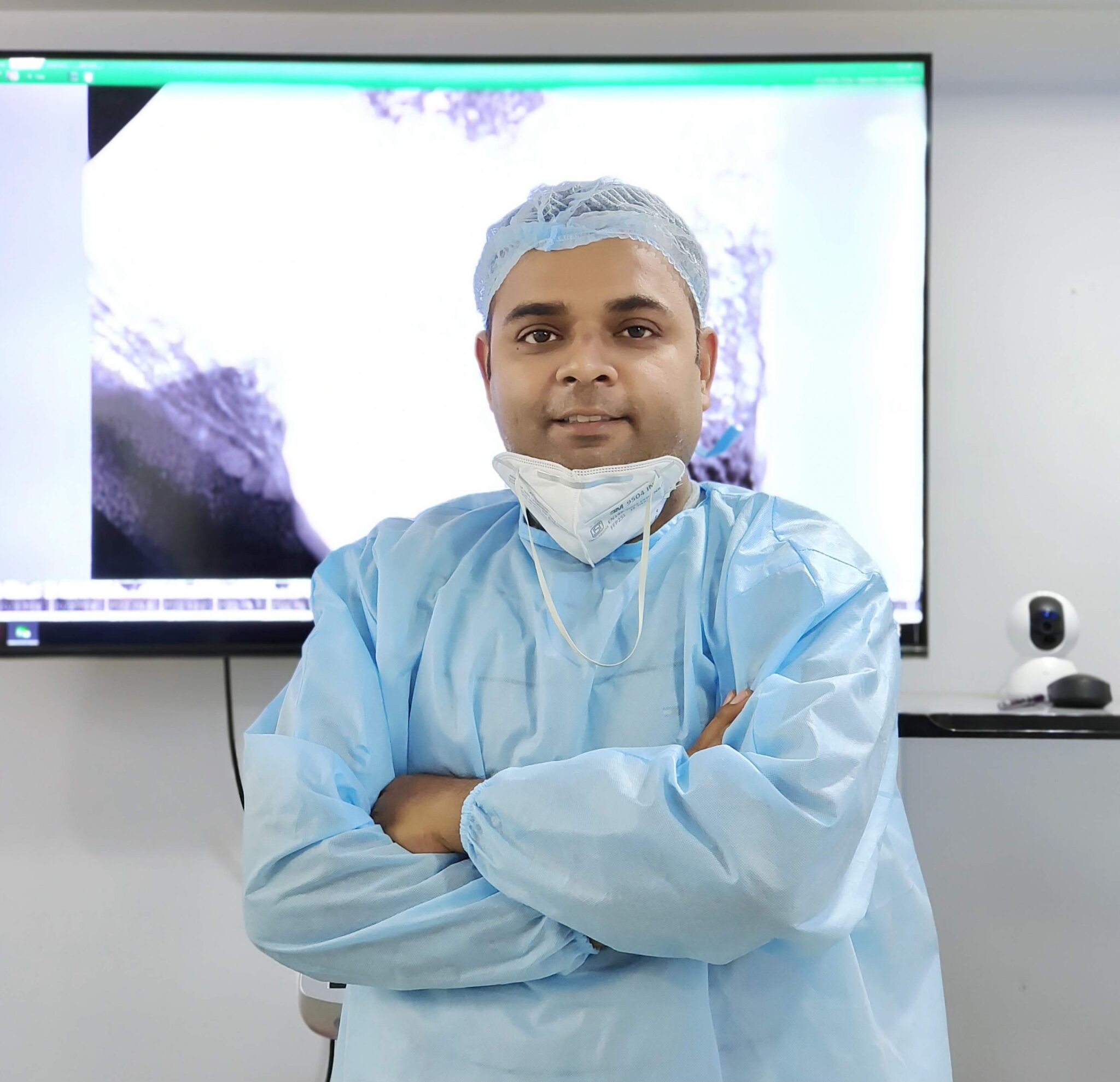
Meet Dr Harpreet Singh at Happi Smiles
Dr Harpreet Singh completed BDS and MDS training at Manipal in Conservative Dentistry and Endodontics and reviews this page for general clinical accuracy. Paediatric pulp therapy and complex immature permanent tooth care may require an appropriately trained paediatric dentist or endodontist.
View Dr Harpreet Singh’s profile
Dr Harpreet Singh is identified as the clinician responsible for the page’s general clinical review.
Visiting Happi Smiles Dental Clinic in Indira Nagar
Clinic details
Happi Smiles Dental Clinic and Implant Center
S-95, Bhoothnath Market, Sector 5, Indira Nagar, Lucknow, Uttar Pradesh 226016
Phone: 07019725870
Hours: 10:00 AM–9:00 PM, Monday to Sunday
Hours can change on holidays. Call before travelling or if you need current accessibility or parking guidance.
Clinic map
Load the interactive map only when needed.
The clinic is in Bhoothnath Market, Sector 5, Indira Nagar, Lucknow.
Root Canal for Children FAQs
Is a pulpotomy the same as a pulpectomy?
No. A pulpotomy treats the crown portion of pulp while a pulpectomy removes pulp tissue from primary-tooth canals.
Why treat a primary tooth if it will fall out?
A maintainable primary tooth can support comfort, eating and space until its expected exfoliation.
Can every infected primary tooth be saved?
No. Restorability, infection, resorption, remaining lifespan and the child’s needs determine whether treatment or extraction is safer.
Why is root development important in permanent teeth?
Healthy pulp supports continued root formation, so vital pulp preservation may be prioritised in suitable immature teeth.
Will my child need a crown after pulp therapy?
Selected primary molars and weakened teeth may need full coverage to protect the remaining structure and seal.
Are antibiotics enough for a dental infection?
No. They do not remove the source inside a tooth and are reserved for selected spreading or systemic infection.
What follow-up is needed?
Clinical and sometimes radiographic review checks symptoms, healing, restoration integrity and root development or resorption.
When is tooth infection urgent?
Facial swelling, fever, pus, severe or night pain, trauma or difficulty eating needs prompt care. Breathing or swallowing difficulty is an emergency.
Individual diagnosis and treatment planning may differ from these general answers.
Arrange an assessment for pulp therapy for children in Lucknow
Contact the clinic to discuss symptoms, previous records and current appointment availability.
Contact the clinic
Call or message the clinic. Avoid sending confidential medical records through an unsecured message.
Related dental treatments in Lucknow
Children’s tooth fillings
Review restoration before decay reaches the pulp.
Explore children’s tooth fillingsPediatric dentistry
Understand comprehensive children’s care and referral.
Explore pediatric dentistryDental crowns
Review full-coverage restoration concepts.
Explore dental crownsClinical information sources
- AAPD: Pulp therapy for primary and immature permanent teeth
- AAPD: Vital pulp therapies in primary teeth
- AAPD: Behavior guidance for the pediatric dental patient
Sources accessed 1 October 2026. This page provides general education and does not replace examination, diagnosis or personalised advice.