Reassessment of previously root-treated teeth in Indira Nagar
Root Canal Retreatment in Lucknow
Root canal retreatment reopens a previously treated tooth so the earlier root filling can be removed and the canal system reassessed, cleaned, disinfected and sealed again. It may be considered when symptoms, infection or another problem develops after earlier endodontic care.
At Happi Smiles Dental Clinic and Implant Center in Indira Nagar, Lucknow, Dr Harpreet Singh evaluates the previous treatment, current restoration, root anatomy, cracks and remaining tooth structure before recommending retreatment or another option.
Endodontic reassessments are available Monday to Sunday, 10:00 AM–9:00 PM. Call to confirm current availability.
Medically reviewed by Dr Harpreet Singh on 30 September 2026.
Root Canal Retreatment in Lucknow: the short answer
Root canal retreatment at Happi Smiles Dental Clinic and Implant Center in Lucknow is a second endodontic procedure for a previously treated, restorable tooth. Dr Harpreet Singh investigates why the tooth has not healed or has become symptomatic before deciding whether nonsurgical retreatment is appropriate.
A clinical assessment is required before deciding whether this care is appropriate.
What is Root Canal Retreatment?
The canals are then cleaned, shaped and disinfected again before being refilled. The access must be sealed and the tooth restored afterwards. Existing crowns, posts or cores can make access more complex and may need modification or removal.
Retreatment does not automatically mean the earlier care was negligent. Teeth can develop new decay, fractures or leakage years later, and some anatomical challenges are difficult to identify initially.
Retreatment is a new diagnostic and technical procedure, not simply a repeat of the original appointment.
Who may need Root Canal Retreatment in Lucknow?
Reasons for reassessment
- Persistent or returning pain on biting
- A sinus tract, swelling or infection around a treated root
- New decay or leakage beneath a filling or crown
- A missed or incompletely treated canal
- A restoration that failed to protect the canal seal
When retreatment may not be suitable
- A vertical root fracture
- Too little tooth structure for reliable restoration
- Severe periodontal loss or unfavourable mobility
- An obstruction that cannot be managed safely
- A tooth whose expected benefit does not justify the procedure
A symptom-free tooth can still require review when an image shows a persistent lesion, while pain near a treated tooth may originate from another tooth, the bite, sinuses or jaw muscles.
Retreatment is considered only after confirming the source of disease and the tooth’s restorative outlook.
Why can a root-treated tooth develop problems in Lucknow?
Persistent disease can occur when complex anatomy was not accessible, a canal was missed, cleaning was limited by calcification or an obstruction, or bacteria remained in areas instruments could not reach. Delayed or leaking restoration can allow new contamination from the mouth.
Not every radiographic shadow represents active disease. Comparison with earlier images, symptoms and clinical findings helps determine whether observation, retreatment, surgery or extraction should be discussed.
Finding the likely cause is necessary before deciding whether another endodontic procedure can address it.
How is Root Canal Retreatment planned at Happi Smiles?
Happi Smiles reports digital X-rays, intraoral cameras, scanning technology and Dr Harpreet Singh’s advanced training in microscopic endodontics. Magnification can support inspection of the pulp chamber, canal openings and existing materials, but it cannot overcome a non-restorable fracture.
Planning combines the biological cause, technical access and the possibility of restoring the tooth afterwards.
What happens during Root Canal Retreatment?
Access
The tooth is numbed and isolated before the earlier restoration is entered.
Material removal
Existing canal filling and obstructing materials are removed when feasible.
Reassessment
Canals are inspected, renegotiated, cleaned and disinfected.
Refilling and seal
The prepared canals are filled again and the access is sealed for restoration.
A post, crown, separated instrument or calcified canal may change the sequence and risk. Treatment can require more than one visit when infection, anatomy or symptom review warrants staging.
Retreatment requires controlled removal of previous materials followed by renewed cleaning, disinfection and sealing.
Will I need local anaesthesia in Lucknow?
Root canal retreatment is usually performed with local anaesthesia and isolation. A tooth without living pulp can still have sensitive tissues around its roots, and removal of restorations or posts may transmit vibration and pressure.
Tell the clinic about allergies, pregnancy, heart conditions, anticoagulants, other medicines and previous difficulty becoming numb. The clinician should confirm comfort before continuing and explain any reason treatment needs to be paused or referred.
Anaesthesia and pacing are adapted to the tooth, procedure and patient’s health information.
Aftercare following Root Canal Retreatment
Tenderness around the tooth or jaw can occur for several days. Follow the medicine and hygiene instructions provided, and avoid heavy biting if a temporary restoration is present or the tooth has not received its planned final restoration.
Contact the clinic for visible swelling, severe pressure lasting more than a few days, an uneven bite, loss of a temporary seal, a suspected medicine reaction or return of the original symptoms. Do not wait for a routine review if swelling is spreading.
Protect the temporary seal and seek early review for swelling, escalating pain or restoration loss.
What should I expect afterwards in Lucknow?
The tooth may need a new core, filling, onlay or crown after retreatment. A restoration removed or altered for access may no longer provide an adequate seal or structural protection. The timing of this work should be discussed before retreatment starts.
Clinical and radiographic follow-up may be recommended to assess symptoms and healing around the root. Healing is not immediate and cannot be judged from symptoms alone. New decay, fracture and periodontal disease remain possible after endodontic care.
Retreatment and the definitive restoration form one tooth-preservation plan.
What are the limits of Root Canal Retreatment?
Existing posts, separated instruments, ledges, perforations, calcification and altered anatomy can limit access. A crack may be impossible to confirm before treatment, and disease may persist even after technically careful retreatment.
The clinic may decline or refer treatment when safe isolation is not possible, the tooth cannot be restored, a vertical root fracture is suspected, specialist surgery is more appropriate or medical risk requires another setting. Alternatives can include observation in selected stable cases, endodontic surgery, extraction and replacement.
The expected benefit must justify the biological, technical and restorative risks of reopening the tooth.
Root Canal Retreatment at Happi Smiles Dental Clinic in Lucknow
Happi Smiles reports digital imaging and Dr Harpreet Singh’s advanced training in microscopic endodontics. Retreatment planning focuses on the cause of persistent disease, safe access through existing dentistry and the restoration needed after the canals are resealed.
Previous records reviewed
Earlier images and treatment details are considered when available.
Alternatives discussed
Nonsurgical retreatment is compared with surgery, monitoring or extraction where relevant.
The clinic combines examination, explanation and access to other dental disciplines when the findings require them.
Meet Dr Harpreet Singh at Happi Smiles
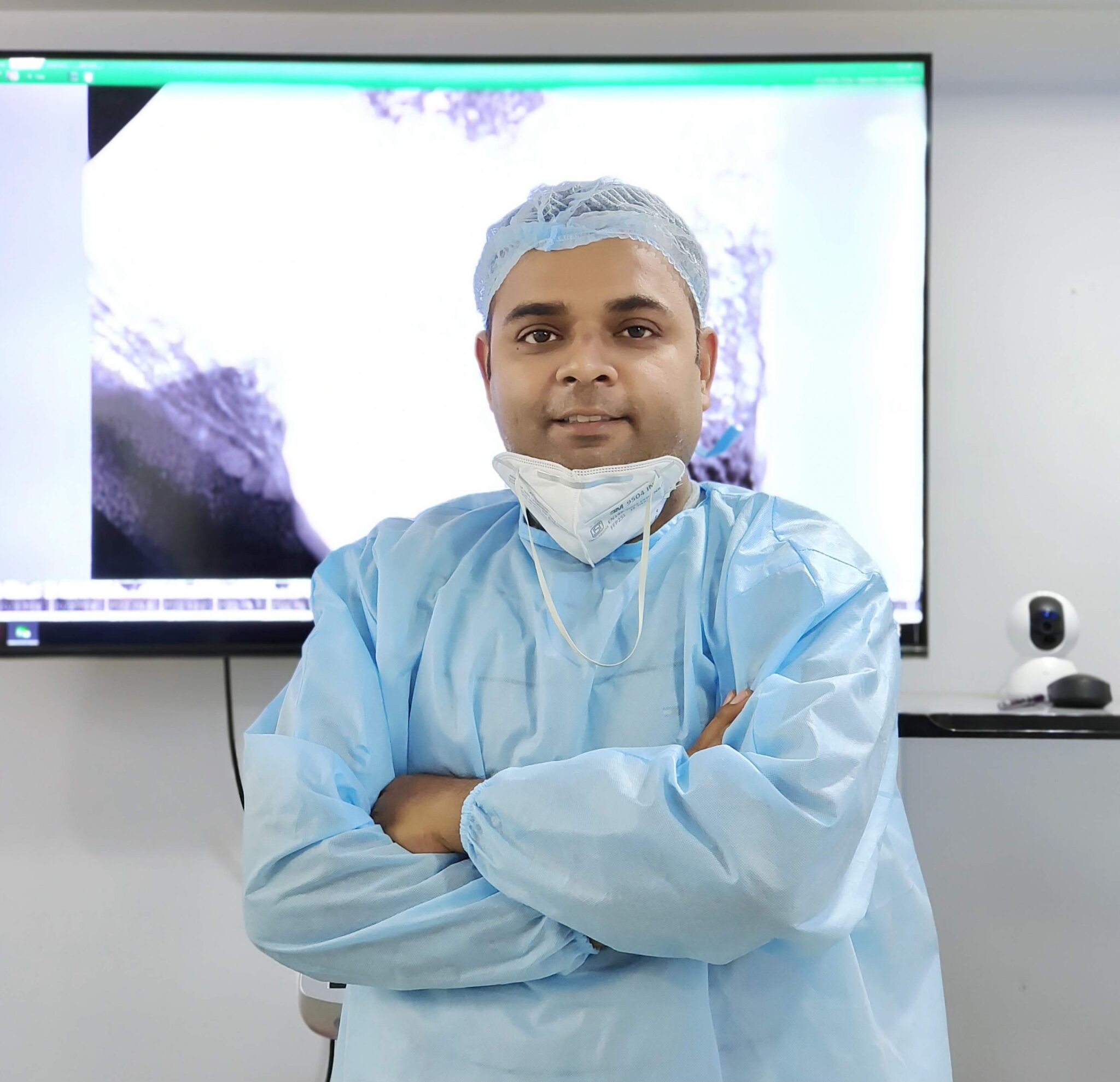
Dr Harpreet Singh completed BDS and MDS training at Manipal in Conservative Dentistry and Endodontics. The clinic reports advanced training in microscopic endodontics, which is relevant when previously treated teeth require detailed inspection and management of altered canal anatomy.
View Dr Harpreet Singh’s profile
Dr Harpreet Singh is identified as the clinician responsible for the page’s general clinical review.
Visiting Happi Smiles Dental Clinic in Indira Nagar
Clinic details
Happi Smiles Dental Clinic and Implant Center
S-95, Bhoothnath Market, Sector 5, Indira Nagar, Lucknow, Uttar Pradesh 226016
Phone: 07019725870
Hours: 10:00 AM–9:00 PM, Monday to Sunday
Hours can change on holidays. Call before travelling or if you need current accessibility or parking guidance.
Clinic map
Load the interactive map only when needed.
The clinic is in Bhoothnath Market, Sector 5, Indira Nagar, Lucknow.
Root Canal Retreatment FAQs
Why can a tooth need retreatment years after a root canal?
New decay, restoration leakage, fracture or previously inaccessible anatomy can allow disease to develop or return after a period without symptoms.
Does retreatment always require removing the crown?
Not always. Access may sometimes be made through a restoration, but its condition, material, design and the presence of a post affect the safest approach.
Can a post or separated instrument be removed?
Removal may be possible in selected cases, but it can weaken or perforate the root. The dentist weighs access, position, remaining dentine and alternative options.
Is root canal retreatment the same as apicoectomy?
No. Retreatment approaches the canal through the crown of the tooth. An apicoectomy is a surgical procedure near the root tip and is considered in different circumstances.
How many visits does retreatment take?
The number varies with infection, existing materials, anatomy, symptoms and restorative steps. Complex access or staged disinfection can require additional visits.
Will the tooth need another crown?
The existing restoration may need repair or replacement if it was removed, damaged or no longer seals and protects the tooth adequately.
Can retreatment fail?
Yes. Persistent bacteria, inaccessible anatomy, cracks, leakage or limited healing can lead to further disease. Surgery or extraction may then be considered.
When is swelling around a root-treated tooth urgent?
Contact the clinic promptly for swelling, fever, pus or increasing pain. Breathing or swallowing difficulty and swelling spreading towards the eye or neck require urgent medical attention.
Individual diagnosis and treatment planning may differ from these general answers.
Arrange an assessment for Root Canal Retreatment in Lucknow
Contact the clinic to discuss symptoms, previous records and current appointment availability.
Contact the clinic
Call or message the clinic. Avoid sending confidential medical records through an unsecured message.
Related dental treatments in Lucknow
Root canal treatment
The primary endodontic procedure that precedes any retreatment decision.
Explore root canal treatmentMicroscopic root canal treatment
Enhanced illumination and magnification may assist selected complex endodontic procedures.
Explore microscopic root canal treatmentDental crowns
A retreated tooth may require a renewed restoration for sealing and structural protection.
Explore dental crownsClinical information sources
- American Association of Endodontists: Endodontic retreatment
- American Association of Endodontists: Other endodontic treatment options
- American Association of Endodontists: Post-treatment care
Sources accessed 30 September 2026. This page provides general education and does not replace examination, diagnosis or personalised advice.