Endodontic assessment and tooth-preservation planning in Indira Nagar
Root Canal Treatment in Lucknow
Root canal treatment manages inflammation or infection inside a tooth by removing affected pulp tissue, cleaning and shaping the root canal system, then filling and sealing it. The treatment is considered only after confirming the diagnosis and whether the tooth can be predictably restored.
At Happi Smiles Dental Clinic and Implant Center in Indira Nagar, Lucknow, Dr Harpreet Singh evaluates symptoms, restorability, cracks, root anatomy and supporting tissues before discussing root canal treatment or another option.
Endodontic assessments are available Monday to Sunday, 10:00 AM–9:00 PM. Call to confirm current availability.
Medically reviewed by Dr Harpreet Singh on 30 September 2026.
Root Canal Treatment in Lucknow: the short answer
Root canal treatment at Happi Smiles Dental Clinic and Implant Center in Lucknow is used for a restorable tooth with inflamed or infected pulp. Dr Harpreet Singh confirms the diagnosis, cleans and seals the canal system, and plans the final restoration needed to protect the tooth.
A clinical assessment is required before deciding whether this care is appropriate.
What is root canal treatment?
The access opening is sealed with a filling, and many structurally weakened teeth later need an onlay or crown. Endodontic treatment addresses the inside of the tooth; the outside still needs a restoration that resists leakage and chewing forces.
Successful planning treats both the canal system and the structural restoration the tooth needs afterwards.
Who may need root canal treatment in Lucknow?
Findings that may support treatment
- Spontaneous or lingering temperature pain
- Pulp necrosis or infection around a root
- A dental abscess associated with a restorable tooth
- Pulp exposure from decay, fracture or trauma
- Selected teeth requiring endodontic treatment before restoration
Reasons another plan may be needed
- A vertical root fracture or non-restorable crack
- Too little tooth structure for a reliable final restoration
- Severe periodontal loss affecting the tooth outlook
- Canal anatomy or access requiring specialist equipment or referral
- A medical or practical issue that cannot be managed safely
Root canal treatment is considered when the pulp diagnosis and the tooth’s restorative outlook both support preservation.
Why does the dental pulp become inflamed or infected in Lucknow?
Deep decay can allow bacteria and their products to approach or enter the pulp. Cracks, fractures, leaking restorations and repeated dental procedures can also irritate or expose it. Trauma may damage the pulp even when the crown looks intact.
Inflammation can be reversible in selected early situations, but irreversible inflammation or pulp death may produce lingering pain, tenderness, swelling or an infection around the root. Symptoms can also reduce temporarily while disease remains, so absence of pain does not always mean the pulp is healthy.
The pulp diagnosis depends on history, examination and tests rather than pain intensity alone.
How is root canal treatment planned at Happi Smiles?
Dr Harpreet Singh reviews the pain pattern, medical history, previous treatment and the tooth’s restorative condition. Clinical tests may include percussion, palpation, bite testing, periodontal probing and pulp sensibility tests. Selected radiographs help assess roots, surrounding bone and previous treatment.
The clinic reports digital X-rays, intraoral cameras, scanners and advanced training in microscopic endodontics. Magnification or three-dimensional imaging may be considered for selected complex cases, but no technology removes the need to judge restorability, crack risk and the final seal.
Planning confirms the pulp diagnosis, root anatomy, restorability and the protection required after treatment.
What happens during root canal treatment?
Anaesthesia and isolation
The tooth is numbed and isolated to control contamination.
Access and cleaning
The pulp space is opened and canal contents are removed.
Shaping and disinfection
Canals are measured, shaped and disinfected using the planned protocol.
Filling and seal
The prepared canal system is filled and the access is sealed for restoration.
A temporary material may be used between visits when further disinfection, symptom review or staged care is required. Complex anatomy, calcification, retreatment and acute infection can change the sequence.
The procedure combines isolation, cleaning, disinfection, canal filling and a reliable coronal seal.
Will I need local anaesthesia in Lucknow?
Root canal treatment is usually performed with local anaesthesia. Inflamed teeth can sometimes be harder to numb, so the clinician checks comfort before and during treatment and may use additional anaesthetic techniques when indicated.
Tell the dentist about allergies, pregnancy, heart conditions, anticoagulants, other medicines and previous difficulty becoming numb. Do not start antibiotics on your own; they do not replace drainage or dental treatment when local care is required.
Anaesthesia and symptom control are adapted to the tooth’s condition and the patient’s health information.
Aftercare following root canal treatment
The tooth and jaw may feel tender for several days, especially if there was pain or infection before treatment. Follow the medication and hygiene instructions provided. Avoid heavy biting on a tooth with a temporary filling or without its planned final restoration.
Contact the clinic if severe pain or pressure lasts more than a few days, visible swelling appears, the bite feels markedly uneven, a temporary restoration comes out, symptoms return or there is a suspected medicine reaction.
Protect the tooth between visits and seek review for swelling, escalating pain or loss of the temporary seal.
What should I expect afterwards in Lucknow?
Completion of the canal filling is not always the end of care. The access opening needs a secure restoration, and a heavily weakened back tooth may need cuspal coverage. Delay can expose the canal system to saliva or allow the tooth to fracture.
Follow-up may include clinical review and a radiograph selected to assess healing. Symptoms and bone changes do not resolve on identical timelines. Even a treated tooth can develop new decay, fracture or recurrent infection and still needs routine maintenance.
Timely final restoration and follow-up are part of protecting a root-treated tooth.
What are the limits of root canal treatment?
Root canal treatment cannot repair every crack, replace missing tooth structure or guarantee healing. Narrow, curved, calcified or previously altered canals can be difficult to clean. Persistent disease may require retreatment, endodontic surgery or extraction after reassessment.
The clinic may decline or refer treatment when the tooth is non-restorable, a vertical root fracture is suspected, periodontal support is inadequate, safe isolation cannot be achieved, specialist surgical care is required or medical risk needs coordination elsewhere. The option of extraction and tooth replacement should be discussed when relevant.
The decision to treat should include technical feasibility, restorability and realistic alternatives.
What happens at Happi Smiles before a treatment is agreed?
Happi Smiles reports digital X-rays, intraoral cameras, scanning systems and Dr Harpreet Singh’s advanced training in microscopic endodontics. These resources support diagnosis and selected complex care, while referral remains appropriate when another setting or discipline is safer.
Tooth-preservation assessment
The pulp diagnosis and restorative outlook are considered together.
Restoration planning
The final seal and structural protection are discussed before treatment is considered complete.
The clinic combines examination, explanation and access to other dental disciplines when the findings require them.
What qualifications does the Happi Smiles dentist hold?
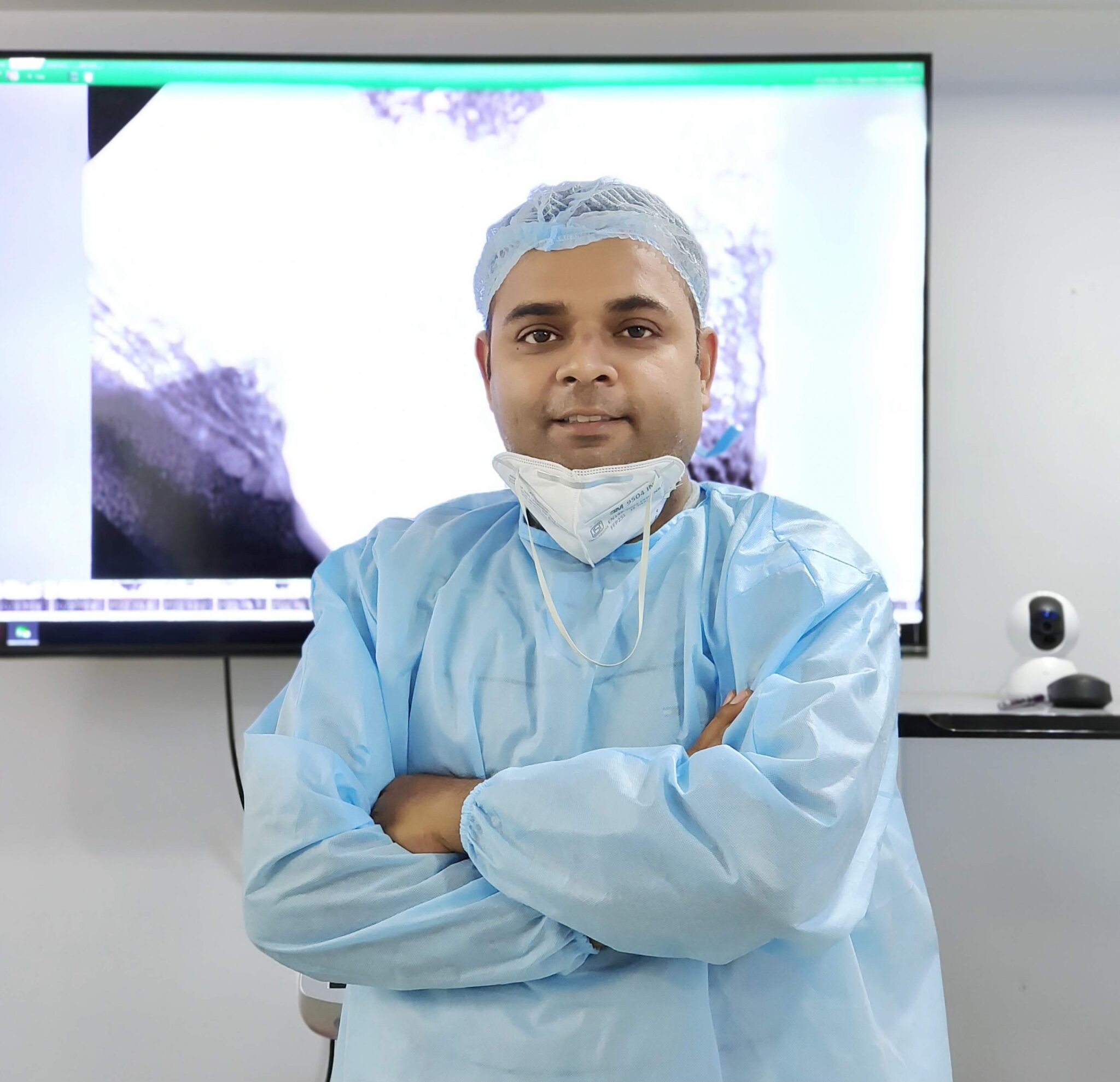
Dr Harpreet Singh completed BDS and MDS training at Manipal in Conservative Dentistry and Endodontics. The clinic reports that he has advanced training in microscopic endodontics. His assessment covers pulp diagnosis, canal anatomy, restorability and the final restoration required after treatment.
View Dr Harpreet Singh’s profile
Dr Harpreet Singh is identified as the clinician responsible for the page’s general clinical review.
What should I know before visiting Happi Smiles Dental Clinic?
Clinic details
Happi Smiles Dental Clinic and Implant Center
S-95, Bhoothnath Market, Sector 5, Indira Nagar, Lucknow, Uttar Pradesh 226016
Phone: 07019725870
Hours: 10:00 AM–9:00 PM, Monday to Sunday
Hours can change on holidays. Call before travelling or if you need current accessibility or parking guidance.
Clinic map
Load the interactive map only when needed.
The clinic is in Bhoothnath Market, Sector 5, Indira Nagar, Lucknow.
What should I know about root canal treatment in Lucknow?
How is the need for root canal treatment confirmed?
The dentist combines symptoms, examination, pulp tests, bite and percussion findings and selected radiographs. No single symptom or X-ray finding confirms every case.
Can antibiotics replace root canal treatment?
Antibiotics may be indicated in selected spreading or systemic infections, but they do not remove infected tissue from inside the tooth. Local dental treatment is often still required.
How many visits will root canal treatment take?
The number varies with diagnosis, infection, tooth anatomy, previous treatment, symptoms and restorative needs. Some teeth can be managed differently from complex or acutely infected cases.
Will the tooth need a crown afterwards?
Not every tooth requires the same restoration. Back teeth and teeth with substantial structural loss often need cuspal protection, while the dentist assesses the remaining structure and bite.
Why can a root-treated tooth still hurt?
Tender tissues around the root, an uneven bite, a crack, persistent infection or another nearby condition can cause symptoms. Continued or worsening pain requires reassessment.
Can root canal treatment fail?
Healing is not assured. Complex anatomy, leakage, cracks, new decay or persistent infection can lead to further treatment. Retreatment, surgery or extraction may then be considered.
Can I chew normally after the procedure?
Wait until numbness clears and avoid heavy biting on a tooth with a temporary filling or without its planned final restoration. Follow the dentist’s instructions for that tooth.
When is tooth-related swelling an emergency?
Contact the clinic promptly for swelling, fever, pus or increasing pain. Difficulty breathing or swallowing, neck or eye involvement and rapidly spreading swelling need urgent medical attention.
Individual diagnosis and treatment planning may differ from these general answers.
Book a dentist appointment for root canal treatment in Lucknow
Contact the clinic to discuss symptoms, previous records and current appointment availability.
Contact the clinic
Call or message the clinic. Avoid sending confidential medical records through an unsecured message.
Further treatment pages from Happi Smiles Dental Clinic
General dentist
How a dentist decides when radiographs are needed.
Read about general dentistsEndodontist
Specialist care for tooth pulp and roots.
Read about endodontistsDental crowns
A structurally weakened root-treated tooth may need cuspal protection.
Explore dental crownsClinical information sources
- NHS: Root canal treatment
- American Association of Endodontists: Root canal treatment
- American Association of Endodontists: Post-treatment care
Sources accessed 30 September 2026. This page provides general education and does not replace examination, diagnosis or personalised advice.