Developing-dentition space assessment in Indira Nagar
Space Maintainers in Lucknow
Space maintainers are fixed or removable appliances used in selected children after early loss of a primary tooth. Their purpose is to preserve an important space for an unerupted permanent tooth, but not every missing primary tooth requires an appliance.
At Happi Smiles Dental Clinic and Implant Center in Indira Nagar, Lucknow, planning considers which tooth was lost, time since loss, dental age, development of the successor, available space, bite, oral hygiene and cooperation. Complex cases are coordinated with a paediatric dentist or orthodontist.
Children’s space-maintenance assessments are available Monday to Sunday, 10:00 AM–9:00 PM. Call to confirm paediatric or orthodontic availability.
Medically reviewed by Dr Harpreet Singh on 1 October 2026.
Space Maintainers in Lucknow: the short answer
Space maintainers at Happi Smiles in Lucknow are considered after premature loss of a primary tooth when drifting could reduce space for the developing permanent tooth. The decision is individual: some spaces need observation, some require maintenance, and lost space may require orthodontic space regaining rather than a simple maintainer.
A clinical assessment is required before deciding whether this care is appropriate.
What are this treatment and why are they used in Lucknow?
Primary teeth help guide permanent teeth and preserve arch length. When one is lost substantially earlier than expected, adjacent teeth may tip or drift into the space. A maintainer holds selected space but does not actively straighten the whole bite.
The benefit depends on the particular tooth, dental stage and risk of space loss. Maintaining a space that is already inadequate or no longer needed can be unhelpful.
Space maintenance is a targeted developmental intervention, not an automatic response to every extraction.
When may a child need space maintainers in Lucknow?
An appliance may be considered after premature loss of a primary molar when the successor is not ready to erupt and space could close. Need is influenced by tooth position, eruption sequence, time since loss, crowding, occlusion and the child’s dental development.
Loss of some primary teeth, including many front teeth, may not require conventional space maintenance for arch length. Multiple missing teeth, congenital absence, ectopic eruption or significant crowding may need specialist planning.
The question is not only whether a tooth is missing, but whether preserving that specific space will help development.
How are space maintainers planned at Happi Smiles?
The dentist reviews why and when the tooth was lost, symptoms, medical history, caries activity and the child’s ability to clean and cooperate. Examination assesses the available space, adjacent teeth, bite, eruption and condition of possible supporting teeth.
Selected radiographs may show the developing successor, its position and root formation. Measurements, scans or models can support a diagnostic summary. If space has already been lost, orthodontic assessment may be needed.
Planning combines clinical space analysis with the child’s dental age and successor development.
Which types of space maintainers may be considered?
Fixed designs
- Band-and-loop for selected single-tooth spaces
- Distal-shoe appliance in carefully selected eruption situations
- Lower lingual holding arch for selected bilateral needs
- Upper arch designs for selected bilateral needs
Planning factors
- Location and number of missing teeth
- Age and eruption of permanent teeth
- Bite and amount of remaining space
- Caries risk and support-tooth condition
- Hygiene, cooperation and follow-up reliability
Removable appliances are suitable only in selected circumstances and rely on consistent wear and safe handling. Appliance names do not replace a diagnosis.
Design should match the developmental problem and be maintainable by the child and family.
What happens when space maintainers are fitted?
Stabilise health
Decay, infection and supporting teeth are addressed first.
Record
Measurements, a scan or impression may guide fabrication.
Fit
The appliance is seated, retained and checked for comfort and bite.
Monitor
Fit, cleanliness, tissue health and eruption are reviewed.
Some appliances are laboratory-made and require more than one visit. The child and parent should be shown how to clean it and what changes require contact with the clinic.
Fitting begins a monitoring period; it is not the end of treatment.
What are the risks and limits of space maintainers?
Plaque can collect around bands or wires and contribute to enamel decalcification, decay or gum inflammation. An appliance can loosen, break, distort, irritate tissue or interfere with eruption. Removable designs can be lost or not worn.
Space can still change despite treatment, and later orthodontic care may be needed. A fixed appliance must be removed or modified at the correct time so it does not obstruct the permanent tooth.
Benefit depends on appliance condition, hygiene and timely developmental review.
How should children care for space maintainers?
Brush carefully around bands, wires and supporting teeth with fluoride toothpaste, and use any recommended interdental aid. Avoid habits or foods the clinician identifies as likely to bend or dislodge the appliance. Do not pull or play with a fixed wire.
Removable appliances should be worn, cleaned and stored as instructed. Families should check for looseness, sharp edges, trapped food, gum swelling or changes in fit.
Clean supporting teeth and an undamaged appliance protect both the space and the child’s oral health.
When should space maintainers be reviewed or removed?
Attend the scheduled reviews so the dentist can check retention, tissue health, decay, space and eruption. Call sooner if the appliance becomes loose or broken, causes pain, traps into the gum, affects eating or speech, or appears to have been swallowed.
Removal timing depends on eruption of the successor and the original treatment objective. Do not wait for discomfort: an appliance can become unsuitable as the mouth develops even when the child has no pain.
Timely review and removal prevent a useful appliance from becoming an obstacle.
Space Maintainers at Happi Smiles Dental Clinic in Lucknow
Happi Smiles should assess dental development before recommending a space maintainer and coordinate paediatric or orthodontic input for complex eruption, appliance or space-loss problems.
Development-led decision
Tooth position, dental age, successor and available space guide the plan.
Ongoing supervision
Appliance fit, hygiene, eruption and removal timing are actively reviewed.
The clinic combines examination, explanation and access to other dental disciplines when the findings require them.
Meet Dr Harpreet Singh at Happi Smiles
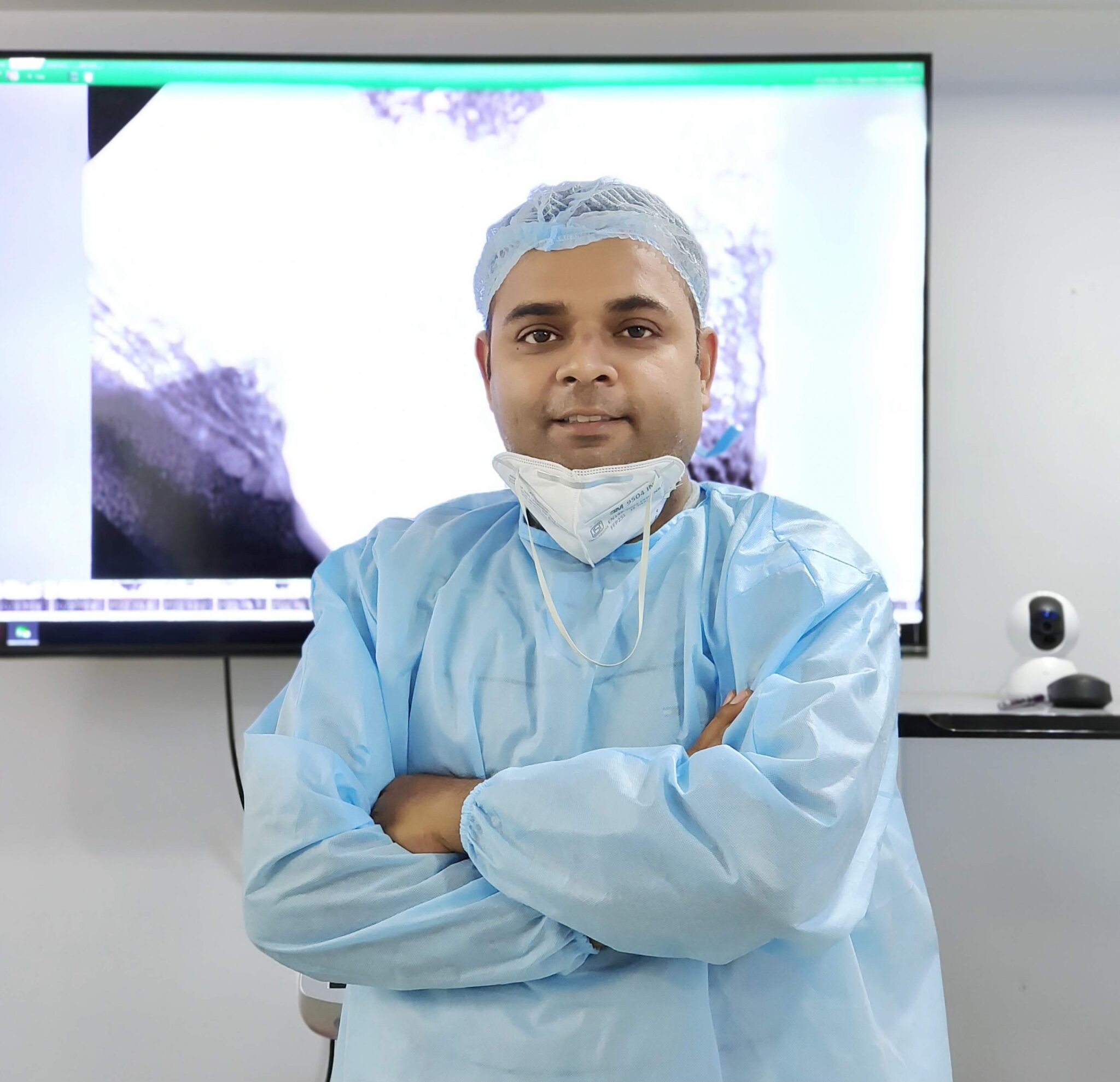
Dr Harpreet Singh completed BDS and MDS training at Manipal in Conservative Dentistry and Endodontics and reviews this page for general clinical accuracy. Children needing complex space management, eruption guidance or orthodontic treatment should be assessed by an appropriately trained paediatric dentist or orthodontist.
View Dr Harpreet Singh’s profile
Dr Harpreet Singh is identified as the clinician responsible for the page’s general clinical review.
Visiting Happi Smiles Dental Clinic in Indira Nagar
Clinic details
Happi Smiles Dental Clinic and Implant Center
S-95, Bhoothnath Market, Sector 5, Indira Nagar, Lucknow, Uttar Pradesh 226016
Phone: 07019725870
Hours: 10:00 AM–9:00 PM, Monday to Sunday
Hours can change on holidays. Call before travelling or if you need current accessibility or parking guidance.
Clinic map
Load the interactive map only when needed.
The clinic is in Bhoothnath Market, Sector 5, Indira Nagar, Lucknow.
Space Maintainers FAQs
Does every early-lost primary tooth need a space maintainer?
No. The missing tooth, dental age, successor development, available space, bite and risk of drifting determine need.
What does a space maintainer do?
It preserves selected space for a developing permanent tooth; it does not straighten the entire bite.
Can a space maintainer regain space already lost?
Usually not. Established space loss may require orthodontic assessment and active space-regaining treatment.
Are space maintainers fixed or removable?
Both designs exist, but suitability depends on the location, number of missing teeth, development, hygiene and cooperation.
How long must a child wear one?
Duration follows eruption and the treatment objective, so scheduled clinical and sometimes radiographic review is required.
Can children eat normally with a space maintainer?
Often yes after adaptation, but follow appliance-specific advice and avoid items or habits likely to loosen or bend it.
What if a space maintainer becomes loose?
Stop manipulating it and contact the clinic promptly. A loose appliance can damage tissue, be swallowed or fail to preserve space.
When is an appliance problem an emergency?
Choking or difficulty breathing or swallowing requires urgent medical help; pain, swelling, bleeding or an embedded component needs prompt dental advice.
Individual diagnosis and treatment planning may differ from these general answers.
Arrange an assessment for dental space maintainer assessment and treatment in Lucknow
Contact the clinic to discuss symptoms, previous records and current appointment availability.
Contact the clinic
Call or message the clinic. Avoid sending confidential medical records through an unsecured message.
Related dental treatments in Lucknow
Pediatric dentistry
Review comprehensive dental development and preventive care.
Explore pediatric dentistryBraces for kids
Understand orthodontic assessment for developing bites.
Explore braces for kidsDental check-up for children
Monitor eruption, tooth loss and bite development.
Explore dental check-up for childrenClinical information sources
- AAPD: Management of the developing dentition and occlusion
- AAPD: Periodicity of examination and preventive services
- AAPD: Caries-risk assessment and management
Sources accessed 1 October 2026. This page provides general education and does not replace examination, diagnosis or personalised advice.